
Walking the Line
Keeping Dogs Safe When Others Don't — or Won't

It was a beautiful morning.
The kind of morning that reminds you why you have dogs. The air was fresh, the neighborhood was quiet, and I was walking down the street with Pike and Gus in front of me.
Then I heard the bark.
Before I even saw the dog, my instincts kicked in. A head popped up over the railing of a nearby porch, and I immediately moved my boys from the sidewalk into the street. I didn't know what was about to happen, but I knew I wanted some distance between us and the situation.
The dog was already moving down the porch steps.
Fortunately, this story ends without anyone getting hurt. I didn't have to use the walking stick I carry for safety. No one was bitten. No one was injured.
But it was another reminder that every time we step out the door with our dogs, we are sharing space with other people, other animals, and other responsibilities.
And those responsibilities matter.
Losing My Cool
I wish I could tell you I calmly explained to the owner why this encounter was a problem.
I didn't.
The adrenaline hit, the frustration boiled over, and I let some words fly that I'm not particularly proud of. From where I stood, the situation didn't seem to carry the same urgency for the owner that it did for me.
Looking back, I wish I'd handled that conversation differently.
But here's what I don't regret: advocating for my dogs.
They depend on me to make good decisions when situations become unpredictable. Sometimes that means creating distance. Sometimes that means ending the walk. And yes, sometimes it means speaking up when another person's choices put us in a situation we shouldn't have been in.
"My Dog Is Friendly" Isn't the Same as "My Dog Is Under Control"
The dog approaching us was a little white ball of fluff.
Honestly, I wasn't worried that this particular dog was going to hurt Pike or Gus. But here is the thing many people forget: I don't know that dog. And my dogs don't know that dog.
To me, it looked like a bunny or a small animal running toward us. To my dogs, it was an unexpected dog entering their space.
Pike, being Pike, reacted. He barked and lunged.
Was I disappointed? Absolutely.
But was I angry at Pike?
No.
Pike has worked incredibly hard on his reactivity. We have spent a lot of time helping him learn better responses and helping him feel safer in the world around him.
But training doesn't erase instinct.
A dog can make tremendous progress and still struggle when another dog suddenly appears, charges toward them, or enters their personal space without warning.
That isn't failure. That is being a dog.
The important question isn't, "Why didn't your dog just ignore it?"
The important question is, "Why was my dog put in that situation in the first place?"
Leashes Are About More Than Control
One of the biggest misconceptions in dog ownership is that a leash is only necessary because someone's dog is "bad."
That isn't true.
Leashes are about communication. They tell other people:
"My dog is under my control."
"They cannot approach without permission."
"We are respecting the space of others."
A dog can be sweet. A dog can be friendly. A dog can love every person and every animal it meets.
But being friendly does not remove the responsibility to keep that dog from running toward someone else.
Because the other person may have:
A dog who is fearful.
A dog recovering from trauma.
A senior dog who doesn't tolerate greetings.
A service dog who is working.
A reactive dog who has spent years learning to cope.
A child who is afraid of dogs.
Every dog has a story that we cannot see.
What Happens If Something Goes Wrong?
One of the first thoughts I had after this encounter was: "What would have happened if Pike had actually hurt that dog?"
That question is uncomfortable, but it is important.
As dog owners, we're responsible for our animals. Situations involving dogs are complicated, and outcomes can depend on many factors, including local laws, whether dogs were properly restrained, and the circumstances leading up to an incident.
The difficult reality is that the dog who reacts is often the dog everyone notices.
The barking dog. The lunging dog. The dog who looks scary in a moment captured from the outside.
But sometimes that reaction is the result of another person's decision putting them in a situation they should never have been forced to handle.
Advocating for our dogs means understanding that reality and doing everything we can to prevent those moments.
Why I Wear Smart Glasses on Walks
Recently, I've seen a lot of criticism about people who wear smart glasses with cameras. Some people find the technology uncomfortable, and I understand why privacy questions are part of the conversation. Technology should always be used thoughtfully and respectfully.
But for me, these glasses are not about spying on people. They are about safety.
I know what some people will say: just pull out your phone. If I'm wearing smart glasses, I already have the phone on me anyway, so why not use that instead?
Here's the truth: I've been in more of these situations than I care to count, and I panic. Not a little — completely. There is no version of events where I calmly pull out my phone, unlock it, find the camera, hit record, and wrangle two big dogs who are reacting while keeping them away from whatever is charging at us. It happens in a split second, and in that split second I have exactly one job: keep my dogs safe. I don't have a spare hand, a spare second, or a spare brain cell for a phone. But I can say, "Hey, Meta, start recording," and get on with the actual business of handling the situation.
After our last encounter with an out-of-control dog, the dog warden told me that the only way they can take action is with documented proof of the event. Otherwise, it becomes a he-said-she-said situation — unless there are visible injuries, and no one is looking for that. Smart glasses are an easy way to document what happens during our walks.
Having a record of an incident that might occur isn't about trying to get someone in trouble. It's about having accurate information if something goes wrong.
Because memories are imperfect. Stories change. And sometimes the difference between "nothing happened" and "something happened" is having a clear record of the situation.
How We Can Make Walks Safer for Everyone
Keeping our communities safe for dogs — and people — doesn't require everyone to have the same kind of dog. It requires everyone to respect that other dogs are different.
A few simple things can make a huge difference:
Keep your dog contained and under control at all times — even on your own property. Dogs are unpredictable. Even the ones who are calm, cool, and collected 99% of the time can surprise us by going off script and charging at a dog it perceives as entering its territory.
Don't allow your dog to run up to unfamiliar dogs. Ever. This is a good way to end up at the vet's office. Pretend all dogs have giant bubbles around them, and then respect that space by protecting those bubbles like your life depends on it. Because, someday, it might.
Ask before allowing greetings. This isn't negotiable. Your dog may be a social butterfly but not all dogs are looking to expand their friend pool.
Give other dogs space when they need it. Dogs don't carry signs with them that say, "Leave me alone right now." You should assume that other dogs are not approachable and then pivot if you find the opposite to be the case.
Advocate for your own dog instead of expecting your dog to "just deal with it." An unpleasant encounter with another dog can do a lot of damage to an otherwise happy, well-adjusted dog.
Know The Rules Before You Need Them
Dog-related incidents can become complicated quickly. Leash laws, liability, and reporting requirements vary depending on where you live, so it's important to understand the regulations in your own community before there is a problem.
In Ohio, dog owners have legal responsibilities when it comes to keeping their animals under control. Resources like local ordinances and state laws can help you understand what's expected of you as a responsible pet parent.
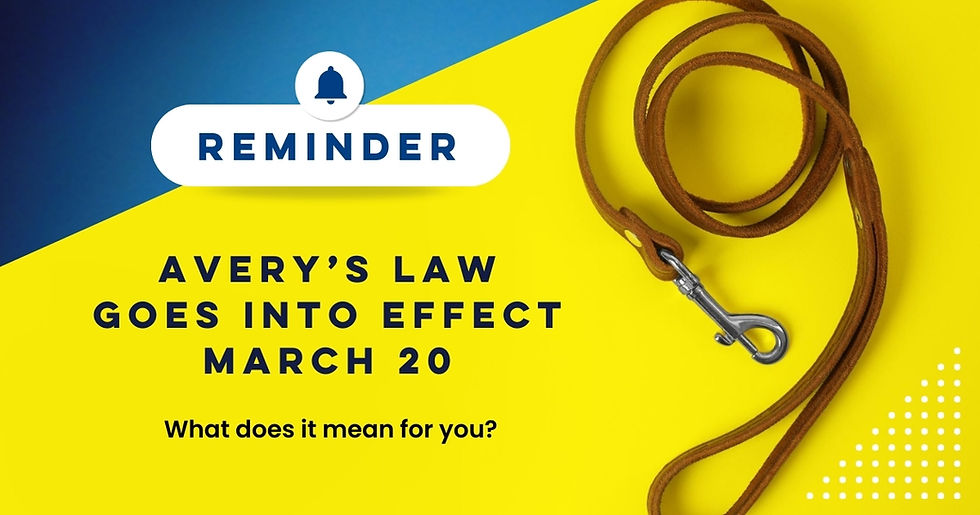
ou can also learn more about Ohio's dangerous dog laws and recent efforts to improve protections for people and pets in my post about Avery's Law.
Our Walking Safety Kit
After experiencing situations where another dog was not under control, I changed how I prepare for walks. These tools aren't about expecting the worst — they're about being prepared if something unexpected happens.
Some things we carry or recommend:
Properly fitted leashes and harnesses
Identification tags and updated microchip information
A phone for communication
Safety tools for creating distance
Technology-enabled glasses
I've also gathered some of my favorite safety products and included links to them on my Barks and Recs page.
The sidewalk belongs to all of us.
The responsibility of dog ownership extends beyond our own yards. A safe walk isn't just about whether our own dog behaves perfectly. It's about whether we've done everything we can to make sure every dog and every person we encounter gets home safely.
And sometimes, the bravest thing we can do for our dogs is simply stand between them and a situation they were never prepared to handle.
Thanks for following along on our adventures. My Barking Life exists to help more dogs stay with the families who love them by sharing stories, practical tips, and a little inspiration along the way. I hope this post encourages you and your dog to discover a new adventure together.

Comments