
They Were Built That Way

There is a dog somewhere right now doing something her owner finds deeply unreasonable.
Maybe she's circling the living room at 7 a.m. with a sock in her mouth, waiting for someone — anyone — to chase her. Maybe he's barking at a corner of the fence where a squirrel was, conservatively, four hours ago. Maybe she's excavating the backyard with the focused energy of someone who has found a career she loves. Maybe he's herding the kids, the cat, and the Roomba into an increasingly tight formation near the dining room table.
The owner, baffled, Googles "why does my dog do this."
The internet offers seventeen theories, most of them involving anxiety, dominance, or a training failure.
Here's a simpler answer: your dog is doing her job.
She just doesn't know you didn't hire her to do it.
A Little History Your Dog Already Knows
Before dogs were pets, they were coworkers. Humans bred them — deliberately and over centuries — to perform specific tasks: hunt, herd, guard, retrieve, track, haul, and sit in the laps of very important people. Every physical trait, every behavioral tendency, every inexplicable habit was, at some point, a design feature.
The American Kennel Club organizes breeds into seven groups based on what they were originally built to do. Understanding those groups won't necessarily make your dog stop doing the thing. But it will make the thing make sense. And once something makes sense, you can work with it.
More importantly: if you're choosing a dog — from a breeder, a rescue, or a shelter — understanding these groups is the closest thing to a cheat code the dog world offers.
The Seven Groups

Sporting dogs
What they were built for: Hunting alongside humans — flushing birds from cover, pointing and holding game, retrieving from land and water. Spaniels, retrievers, setters, and pointers all live here.
What that looks like now: A Labrador who will fetch until your arm falls off. A Golden Retriever who greets every visitor at the door with something in her mouth, because retrieving is what she does and she wants to do it for you. A Springer Spaniel who needs about three times more exercise than most people budgeted for.
Sporting dogs are energetic, people-oriented, and genuinely enthusiastic about participation. They are not good at being left alone with nothing to do.
In the shelter: Labs and Lab mixes are among the most commonly surrendered dogs in the country. Frequently acquired by families who wanted an easygoing dog, frequently surrendered by families who discovered that "easygoing" and "low-energy" are not the same thing. The dog didn't fail. The match did.
Hound dogs
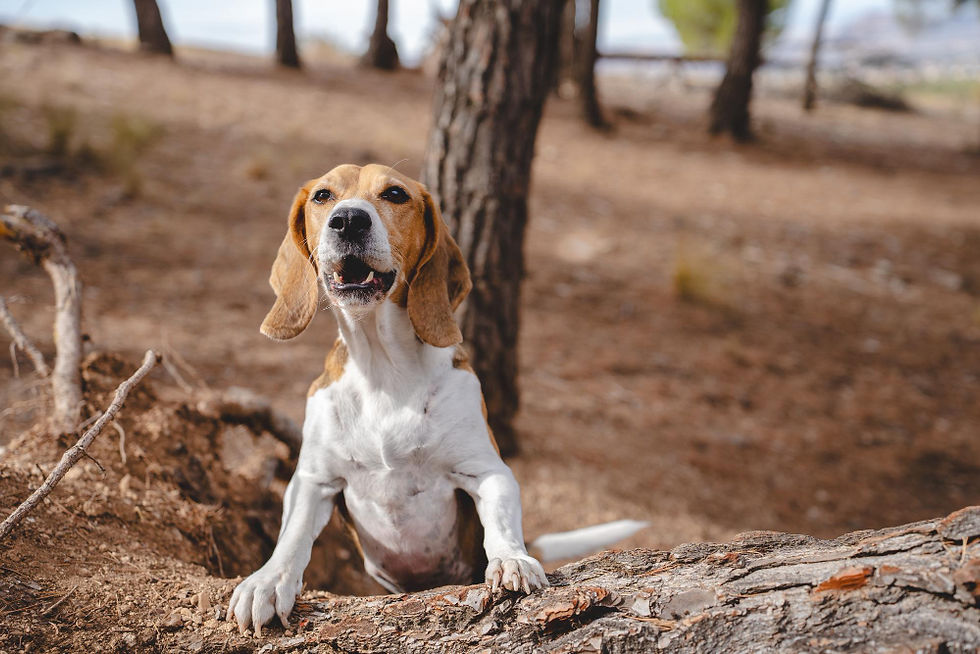
What they were built for: Hunting by sense — either by sight (sighthounds, who chase prey at speed) or by scent (scenthounds, who track a trail for miles and don't particularly care what else is happening). These are two very different dogs grouped together because they both end up at the same place: nose down, or gone.
What that looks like now: A Beagle who cannot hear you calling his name when there is a smell — any smell — anywhere in the vicinity. This is not selective hearing. The scent literally overrides the signal. A Greyhound who is, against all visual evidence, one of the laziest couch dogs on the planet — until something small runs across the yard. A Basset Hound who will follow her nose into traffic with complete serenity.
In the shelter: Beagles are perennial shelter arrivals, usually because their owners didn't anticipate the stubbornness, the baying, or the Houdini-level fence escape work. Greyhound rescues are a genuinely wonderful corner of the dog world — retired racing dogs who make remarkably calm, gentle, and low-maintenance pets, and are adopted almost exclusively by people who did their homework.
Working dogs
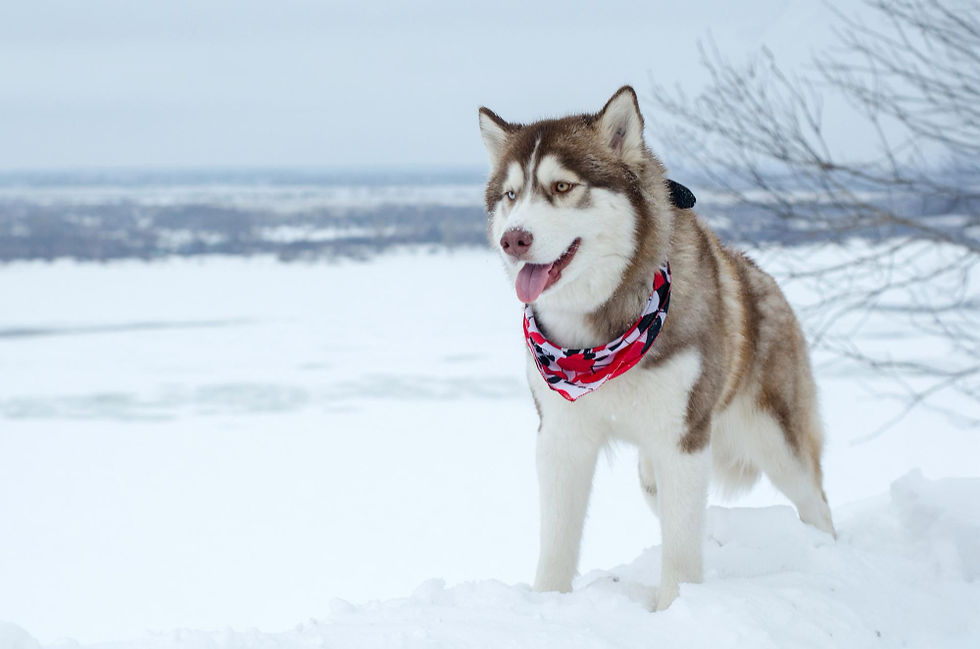
What they were built for: Big jobs in hard conditions. Guarding property and livestock. Pulling sleds across frozen terrain. Performing water rescues in rough surf. Drafting heavy loads. These are large, powerful dogs with deep instincts and the physical capacity to back them up.
What that looks like now: A Siberian Husky who has opinions — loud, sustained, operatic opinions — about your schedule, your choices, and the general state of affairs. A Rottweiler who is deeply devoted to her family and deeply suspicious of everyone else, which is exactly what she was designed to be. A Boxer who is convinced he is a lap dog and will sit on you to prove it.
Working dogs need structure. Not because they're dangerous — though some are powerful enough that training isn't optional — but because dogs with strong instincts and no direction will find their own direction. You won't always like where they land.
In the shelter: Huskies are one of the most-surrendered working breeds, acquired for their striking looks and surrendered when owners discover the shedding (it's a lot), the escape artistry (it's impressive), and the vocal arguments (they are relentless). This is a dog who needs a purpose and a fence that means business. Belgian Malinois — technically a herding breed, but often associated with working and military roles in the public imagination — have seen a sharp rise in shelter surrenders in recent years. More on that shortly.

Terriers
What they were built for: Vermin control. Specifically, going underground after rats, foxes, and badgers — alone, without supervision, making fast independent decisions in tight spaces. The word "terrier" comes from the Latin *terra*. As in earth. As in they were bred to go into it.
What that looks like now: A Jack Russell Terrier who has redecorated your yard. A Scottish Terrier with views. A Bull Terrier who is technically listening to you and has decided, after careful consideration, to do the other thing. Terriers are bold, stubborn, energetic, and frequently hilarious. They were bred to act without being told. That trait did not stay underground.
They're also among the most loyal, entertaining dogs you will ever own — if you find their stubbornness charming rather than infuriating, and if you approach training as a negotiation rather than a decree.
In the shelter: Pit bulls — often classified with terriers, often misunderstood, almost always underestimated — are the most euthanized dogs in American shelters. Breed restrictions, insurance policies, and decades of bad press have made them the dog most punished for human decisions. The ones in shelters are, overwhelmingly, dogs who want a couch and a person and a reason to be good.

Toy dogs
What they were built for: Companionship. Specifically, the kind of companionship that could fit in a lap, travel in a carriage, and spend long hours with one person doing not very much. Toy breeds were developed — often in royal courts — to be emotionally attuned, people-focused, and small enough to be carried.
What that looks like now: A Chihuahua who has chosen one person and is absolutely feral about it. A Cavalier King Charles Spaniel who is physically incapable of being in a different room than you. A Pug who is not a dog so much as a small, opinionated roommate.
Don't let the size fool you into thinking these are low-maintenance dogs. They are high-maintenance emotionally. They were built to be with people, and when they're not, they know it.
In the shelter: Toy breeds are often surrendered after a life change — a move, a health crisis, a new baby. They tend to do beautifully in second homes with people who understand what they're getting: a dog who wants to be your whole world, and wants you to be theirs.

Non-sporting dogs
What they were built for: Honestly, it varies. The Non-Sporting group is the AKC's catch-all category for breeds that don't fit cleanly elsewhere — some are ancient dogs with murky origins, some are working breeds whose jobs disappeared, some are simply their own thing.
What that looks like now: A Dalmatian who needs more exercise than her size suggests. A Poodle — one of the most intelligent breeds in existence — who will solve problems you didn't know you had. A Chow Chow who is not unfriendly, exactly, but who has a very specific definition of "friend." A Boston Terrier who is all personality in a compact, tuxedoed package.
This group demands breed-specific research more than any other. Group generalizations barely apply here. Do the homework.
In the shelter: Dalmatians reliably flood shelters in the years following major films featuring them. It is a pattern so consistent it has a name — the 101 Dalmatians effect — and it has claimed dozens of breeds across decades of cinema. Jack Russell Terriers after The Mask. Chihuahuas after Legally Blonde and Beverly Hills Chihuahua. Saint Bernards after Beethoven. And more recently, Belgian Malinois after Dog — which may be the most instructive example of all.
The Malinois in that film wasn't just a good dog. He was a highly trained military working dog whose behavior was the result of years of intensive, professional work. The training is invisible on screen. The result just looks like the dog. And so people adopted Malinois expecting that dog — calm, focused, responsive — and got, instead, one of the highest-drive working breeds on the planet with nothing to do and nowhere to put it. It is not a coincidence. It is a lesson about choosing a dog for how it looks, or how it performs under conditions most dogs will never experience, rather than what it actually needs on a Tuesday.

Herding dogs
What they were built for: Controlling the movement of other animals — sheep, cattle, reindeer — through a combination of intense eye contact, body pressure, and precisely placed nips. Herding dogs were split off from the Working group in 1983 because their job is specific enough, and their instincts deep enough, to warrant their own category.
What that looks like now: A Border Collie who is herding your children, your other pets, and possibly your houseguests into an increasingly tight cluster near the back door. An Australian Shepherd who has decided the kids need to stay together and is enforcing this decision. A Corgi who is nipping at ankles and sees absolutely nothing wrong with that.
Herding dogs are widely considered the most intelligent group in the AKC. Border Collies, specifically, are considered the most intelligent domestic dog breed. This sounds like a selling point until you understand what it means in practice: these dogs need engagement the way other dogs need food. A bored herding dog is a creative herding dog, and their creativity is not always compatible with your furniture.
In the shelter: Australian Shepherds and Border Collies are among the most-surrendered herding breeds. The pitch is irresistible — smart, beautiful, energetic. The reality is demanding. These dogs need a job, or a sport, or an owner who treats exercise as a daily non-negotiable. They are extraordinary dogs for the right person. The right person knows what they're signing up for.
The Part That's Actually About Something
Here is the thing about shelter dogs: most of them are not mysteries.
A dog's group — and often, with a little research, a dog's likely breed mix — tells you a tremendous amount about what she needs, how she communicates, what will make her difficult, and what will make her shine. The dog isn't an unknown quantity. The question is whether the potential adopter is willing to do twenty minutes of reading before making a ten-to-fifteen-year commitment.
The dogs in shelters aren't there because they're broken. They're there, overwhelmingly, because someone chose a dog based on looks, or impulse, or a movie, or a vague idea of what having a dog would be like — and then discovered that the dog had opinions about that idea.
The Husky wanted to run. The Border Collie needed a job. The Beagle followed his nose into the road one too many times. The Lab needed more exercise than two walks a day. The Pit Bull had the bad luck of looking like something people are afraid of.
None of that is the dog's fault.
Understanding what dogs were built to do doesn't just make you a better owner. It makes you a better advocate. Because when you know why a Beagle bays at 6 a.m., you can explain it to the neighbor who's about to call animal control. When you know why a herding dog nips, you can help a family understand it's fixable — not a reason to surrender. When you know why a Pit Bull in a shelter is probably just waiting for someone to give her a chance, you can say so out loud.
They were built that way.
That's not a problem. That's a starting point.
Take the Quiz
Before you bring home the adorable dog you saw in a movie or TV commercial, make sure it's the right fit for your home and lifestyle. Answer a series of quick questions to find your best dog breed matches! You'll be asked about your preferences and needs for your new dog, and about your everyday activities. The more questions you answer — and answer honestly — the better the matches.
My Barking Life advocates for shelter dogs, responsible ownership, and the radical idea that most dog problems are people problems in disguise. Learn more at mybarkinglife.com.


Another great, informative article, Kim! Question: why DO beagles bay at 6 am, or 2 am as my foster once did? Inquiring minds and all that! Lynn